Blog Topic: “Light Work” – Lis Rhodes
Student Name: Chan Pak San
Student number: 57155254
Introduction
Lis Rhodes is particularly focused on the British experimental film and had a concept of challenges the conventions with cinematic production and the reception. With that and with the concept of expanded cinema of this week research question, I am focusing on the 1975 installation of her “Light Music” with the radical deconstruction of the relationship between the sound and image. This work “Light Music” is quite a quintessential example of how the “expanded cinema” works by the fact that transforming the passive art of film-watching into an active, immersive spatial experience. She treated the cinematic apparatus as both the object and instrument, and I believe her work is perfectly illustrated the core tenets of the expanded cinema concept and moving beyong the screen to engage with viewer’s body and the consciousness directly.
(Img source: https://www.acmi.net.au/stories-and-ideas/seeing-sound-lis-rhodes-light-music/)
(Img source: https://www.acmi.net.au/stories-and-ideas/seeing-sound-lis-rhodes-light-music/)
(Img source: https://lux.org.uk/work/notes-from-light-music/)
Artwork & Analytics
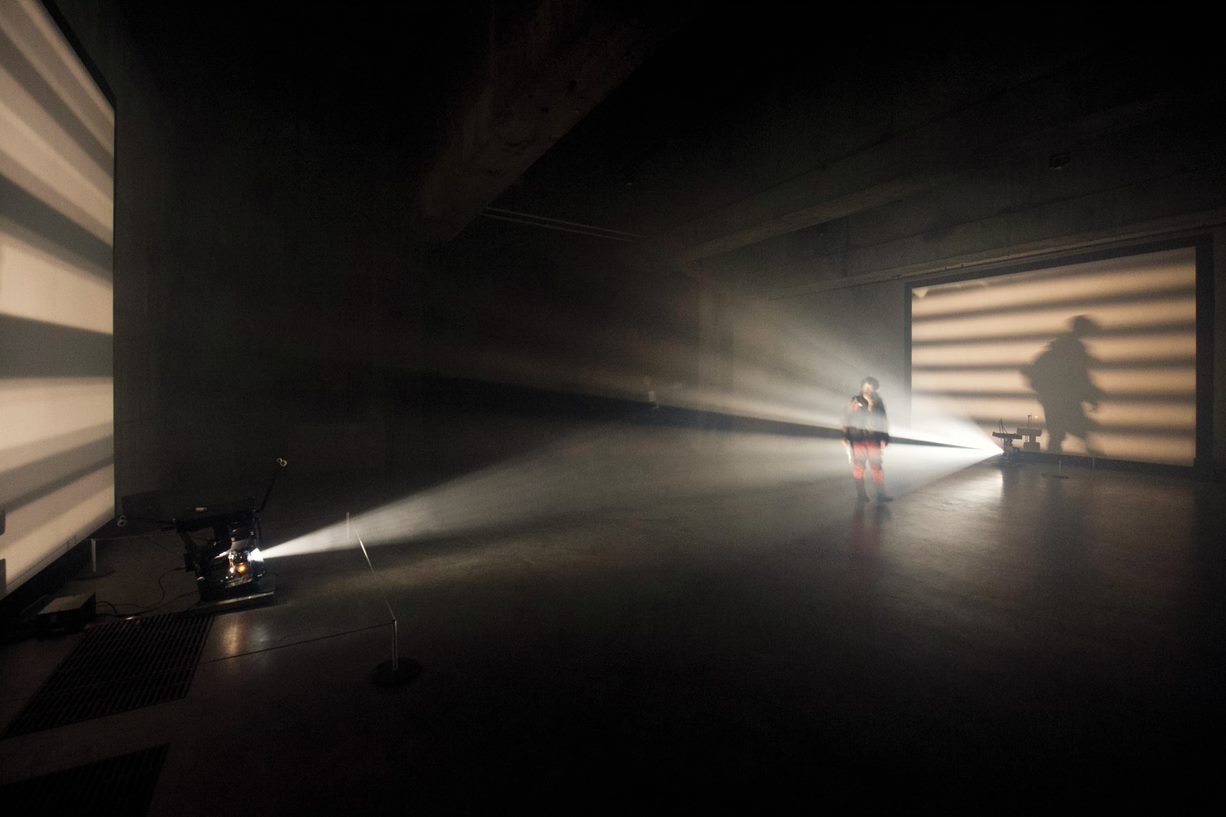
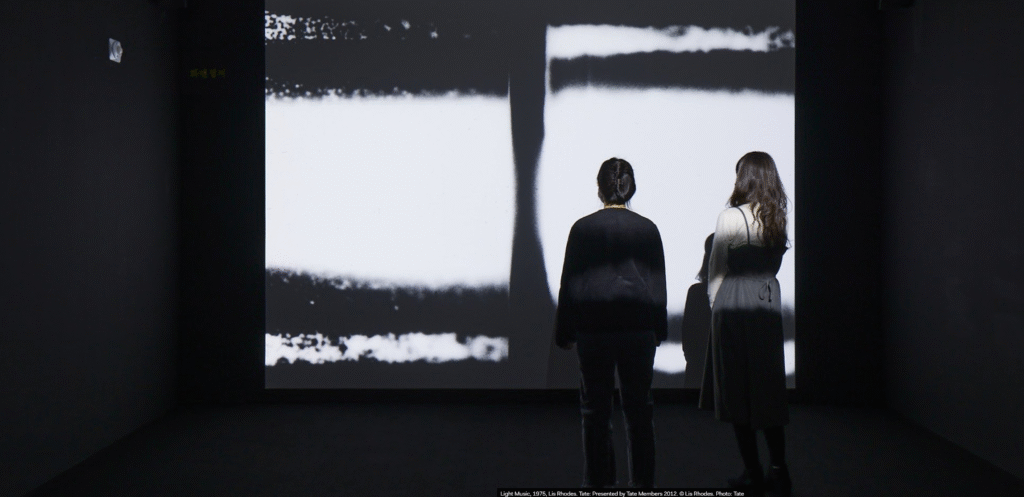
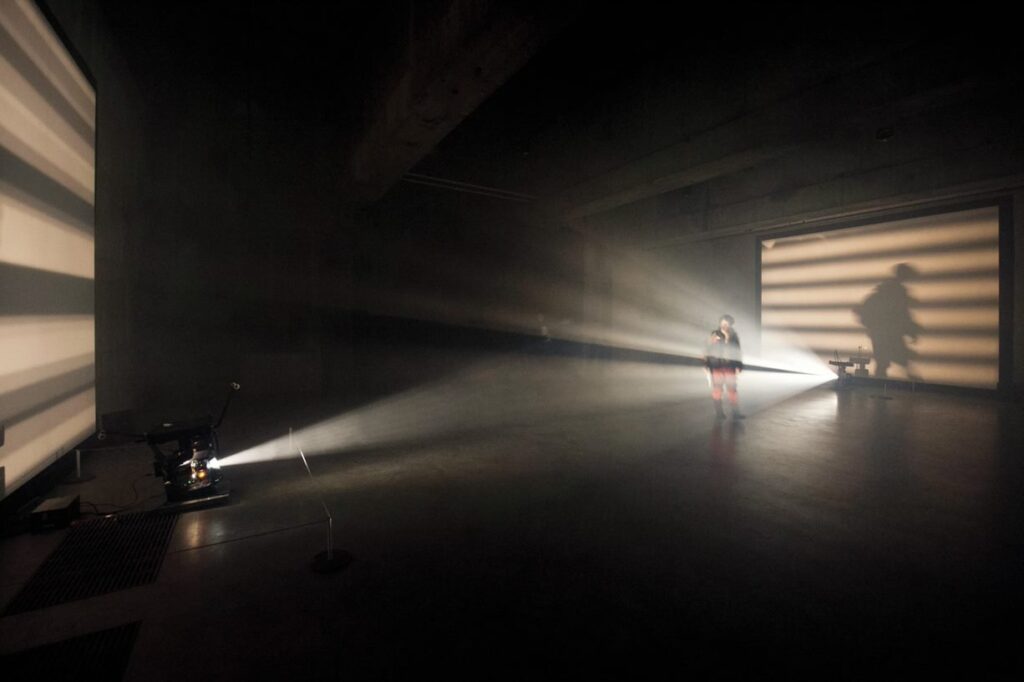
“Light Music” answers the question of the consitutions of the experience of “expanded cinema” with its fundamental alternation the components of a traditional film screening. The work is not actually a film to be watched by audience but rather an environment to be entered. Specifically, it consists of 2 16mm projectors placed opposite each another and projected the abstract patterns across the room onto two screens. The audience can then immerse themselves in the tangible and sculptural forms of light that occupy the physical space and interact with those beams, or using their own bodies to cast shadows to alternate the visual fields, becoming the active performers within the piece rather than just a passive spectators like a normal movie does.
I believe this artwork shows three key practices of expanded cinema as outlined in the lecture:
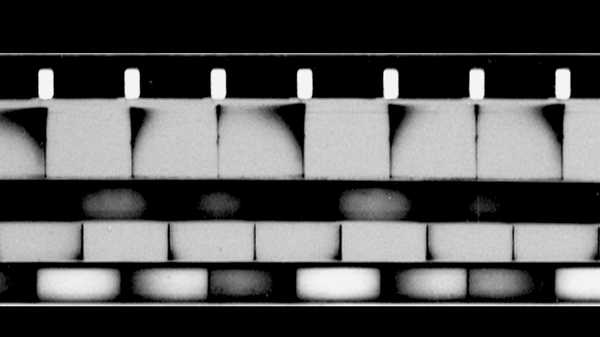
The first one is “Cinema as Object” by the fact that Rhodes treated the physical materials of cinema as the artwork itself by the environment. The “score” of the piece is composed of the abstract black and white patterns drawn directly into the optical soundtrack area of the 16mm filmstrip, which made the film no longer the invisible medium for a narrative but rather becoming a physcial object which is a graphical score. I think similarly, the proejcctors are not hidden somewhere else from the audience like a cinema but rather placed in the center of the room as a sculptural objects, making the audience aware of the apparatus that generated the experience of this artwork.
The second one is “Cinema as Performance” with the inseparable link of the projected image and the resulting sound, giving a sense of “what you see is precisely what you hear” and turning the act of proejction into a real time performance. Given the fact that there is the direct translation of the visual patterns to an intense and flickering soundtrack, it somehow made the viewer conscious of the medium’s process. With the audience participation as mentioned, the audience themselves can alter visual of the projection which further reinforcing the performative aspect which made a unique event co-created by the apparatus and the viewers present in the artwork space.
Lastly the third one is the “Intermedia and Concept”. I believe this artwork from Rhodes is for the feminist motivation to reclaim the role of a femal composer by making the film strip her instrument that added a crucial conceptual layer, especially focused on where the composition is inseparable from the visual medium and to bypass the concept of the traditional way of male dominated musical structures, making this artwork not only an artwork but a political and philosophical statement.
Conclusion
I think in conclusion, this artwork “Light Music” provides a powerful demonstration of the expanded cinema’s “spirit of inquiry, disassembling the conventional cinematic experience of audience and reassembled it into a participatory environmnet that elevate viewer’s awareness of the entire space, the medium and the process. It also highlighted the process can become the performance, inviting audience or the users not just to consume content in today’s digital world, but also the actively engage with the system that creates it.
Leave a Reply